
Mount of Olives Prophecy: Jesus' Final Warning from Jerusalem
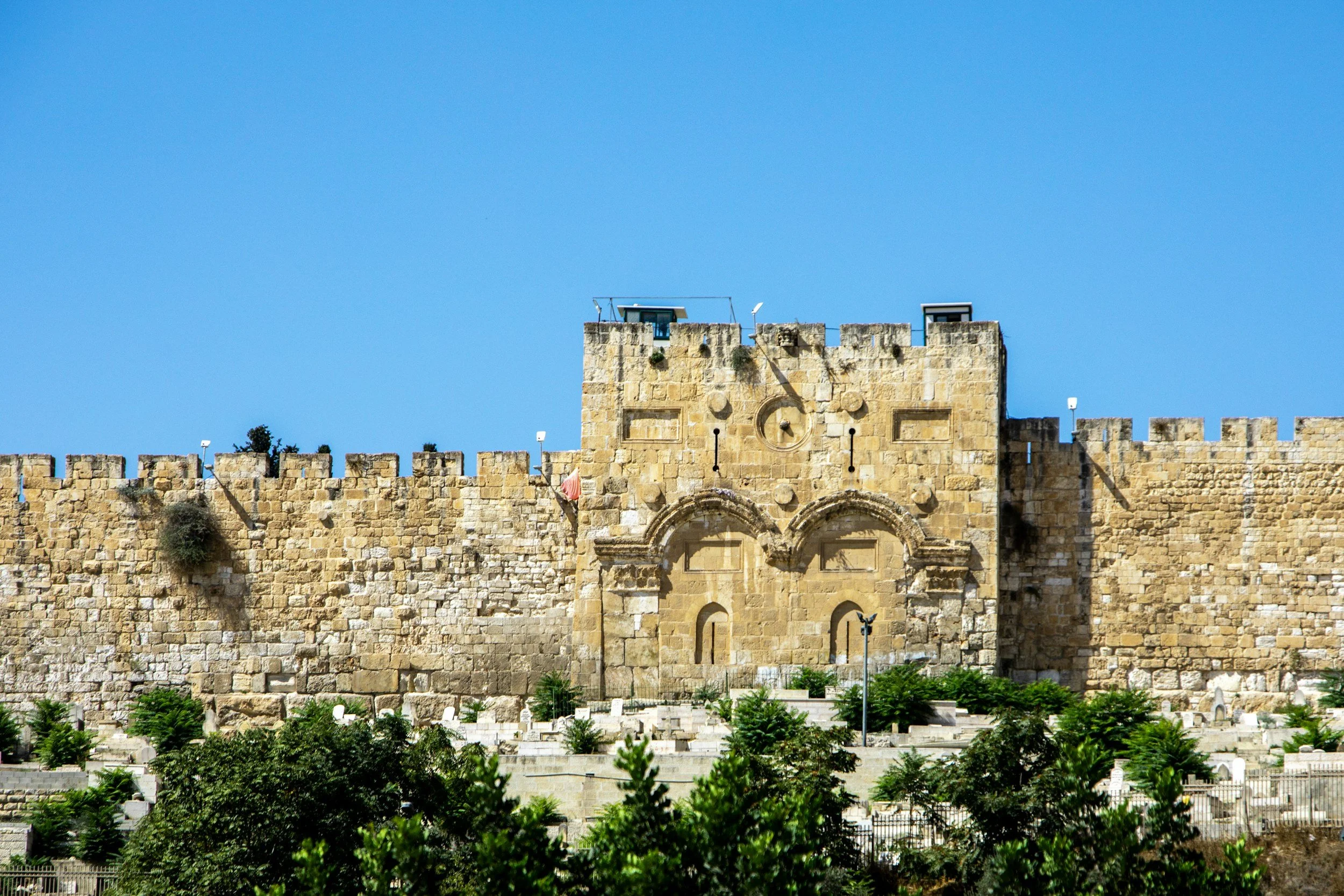
I recently stood on the Mount of Olives. From where I stood, I could see Jerusalem spread out before me, the Temple Mount rising at its center, and just over my shoulder, the Eastern Gate, sealed shut for centuries.
Every one of these places carries biblical significance, and I believe you need to understand that significance for where we are right now in history.
This mountain is not merely scenery. It is a spiritual threshold, a place where heaven and earth meet and where biblical prophecy points both backward and forward. The Mount of Olives prophecy is not simply locked in the past. Its message still speaks to the present, and if you grasp what Jesus said from this mountain, you may not look at current events the same way again.
The Mountain With a Name That Means Something
The name "Mount of Olives" is not poetic. It carries a picture that runs throughout Scripture.
Olives are crushed to release oil. In Scripture, oil is associated with anointing, light, healing, and consecration. Jesus did not pray His hardest prayers in the city. He prayed on the Mount of Olives. Luke 22 tells us that Jesus went to the Mount of Olives as was His custom. This was not a one-time visit. It was a place He regularly returned to.
Just beneath this mountain is a garden called Gethsemane. The name is associated with an oil press. Before the cross, there was the crushing. Before blood flowed from His hands, sweat fell from His brow like drops of blood.
This mountain carries a truth that many would rather avoid: glory is often released through pressure.
That pattern appears throughout Scripture, and it has not changed.
The Eastern Gate and the Sealed Promise
From the ridge of the Mount of Olives, the Eastern Gate of Jerusalem is clearly visible. It has been sealed for centuries. The gate is also associated with Jewish and Christian expectations surrounding the Messiah and biblical prophecy.
The Gospels tell us that Jesus descended from the Mount of Olives during His triumphal entry into Jerusalem, crossing the Kidron Valley as crowds celebrated Him as King. While Christians have interpreted this event in connection with Old Testament prophecy, the exact route Jesus took through Jerusalem and the historical circumstances surrounding the sealing of the Eastern Gate are more complicated than popular tradition sometimes suggests.
But the prophetic picture remains powerful.
One day, according to the Christian understanding of passages such as Zechariah 14, the Messiah will stand on the Mount of Olives. The sealed gate becomes a visual reminder of the tension between earthly power and heavenly authority, between rejection and return.
That is the space in which we are living right now: between His first coming and the promise of His return.
Nothing about that tension is accidental.
What the Olivet Discourse Was Really About
It was on the Mount of Olives that Jesus delivered what we call the Olivet Discourse, recorded in Matthew 24, Mark 13, and Luke 21.
From this setting, He spoke about the destruction of the temple, wars and rumors of wars, false Christs, global upheaval, persecution, and the coming of the Son of Man.
Many people read those passages primarily as fear-based preaching.
They were the opposite.
They were clarity in chaos.
Jesus was not trying to frighten His disciples. He was preparing them—anchoring them to something that would hold when everything else gave way. That is why His warning included the words, "Do not be alarmed."
When the world starts shaking and the unprepared are panicking, the prepared are positioned to remain faithful.
The Mount of Olives prophecy teaches us that prophecy is not primarily about calculating dates. It is about developing discernment. And discernment requires that we stay awake—not passively, but with the kind of wakefulness that produces readiness.
The Hinge of History
Zechariah 14 presents a striking prophecy: "On that day his feet shall stand on the Mount of Olives that lies east of Jerusalem." For Christians, this passage carries profound significance because Jesus ascended from the Mount of Olives, and Acts 1 records the angels telling His disciples that He would return in the same way they saw Him go.
Acts 1:11 says, "This same Jesus will come in the same way that you saw him go."
Christians differ on exactly how every end-times prophecy should be interpreted, but the central promise is clear: Jesus will return.
The Mount of Olives becomes the hinge of the biblical story—a mountain of departure, promise, and anticipated return.
I believe we should live with the expectation that Christ could return at any time. But Scripture does not give us permission to set dates or claim certainty about how close we are.
That expectation should not produce anxiety.
It should produce urgency, faithfulness, and hope.
The question this mountain has always asked is not simply whether you believe.
The question is whether you will remain faithful.
Will You Remain?
Will you remain when it is crushing?
Will you remain when it is confusing?
Will you remain when the world is shaking all around you?
Oil only flows when olives are pressed.
Many of us are living in the space between promise and fulfillment, between calling and cost, between the pressing and the oil.
Jesus stood on this mountain knowing He was about to be betrayed, beaten, and crucified. He stayed faithful anyway.
The Mount of Olives confronts comfortable Christianity head-on. This is not a spectator faith. It is a preparation faith—lived in active anticipation of His return and in daily pursuit of the Great Commission.
"Watching," as Jesus described it in Matthew 24, does not mean staring at the sky. It means living wide awake: with urgency, with holiness, and with a compassion that is willing to pursue the lost.
From this mountain, that calling has never been louder.
Living Full of Oil Until He Returns
From this mountain, Jesus ascended to heaven. And according to the promise of Scripture, He will return.
Until that day, we are called to live awake, live faithfully, and live full of oil.
History is not random. Suffering is not wasted. Jesus is not finished.
And if He was faithful here—in this garden and on this ridge, with the cross ahead of Him—He will be faithful again.
The King is coming back.
The Mount of Olives prophecy points us toward that promise, but it also points us toward the way we should live while we wait.
Those who share in His death will share in His resurrection. Those who carry the cross will carry the crown.
I want to pray with you right now:
Heavenly Father, I thank You for every person who has received this word. Let Your promises be fulfilled, and let nothing be in vain. Thank You for the crushing seasons that release the oil, break through obstacles and barriers, and lead us into what You have destined for us. We say with anticipation: We will be Your vessels to fulfill the Great Commission until all the world has heard. In Jesus' name, amen.
The Mount of Olives prophecy is not ancient history. It is a present reality for everyone who carries the name of Jesus. If this message stirred something in you, go deeper
If this resonated with you and you want to go deeper in your walk with Jesus, get a free copy of my book Journey with Jesus here:
And if you feel called to partner with this ministry as we bring these messages from the very places where Scripture was written, you can give here: linktr.ee/mikesignorellidonations.
Join the Breakers Creator Academy for only $30/mo if you use this link now: https://shorturl.at/46zYT
Download The Breakers App to take courses and find community with believers like you! https://mikesignorelli.com/the-breakers-app/
